

If you’ve been researching real estate in the Greater Toronto Area, you’ve likely heard the term preconstruction. It’s one of the most popular ways to enter the Toronto condo market — and also one of the most misunderstood.
This 2026 guide explains exactly how the preconstruction process works, what costs to expect, and what every buyer should understand before signing an Agreement of Purchase and Sale.
What Is a Preconstruction Condo?
A preconstruction condo is a unit purchased before — or while — the building is being constructed. Instead of walking through a finished unit, you’re buying based on floor plans, renderings, and contractual specifications. Completion typically takes 3 to 5 years.
This differs from resale condos, where you can inspect the exact unit and move in much sooner. Both options can be strategic depending on your timeline, financial position, and long-term goals.
Step 1: Research the Project and the Developer
Not all projects are equal. Before reserving a unit, investigate the developer’s track record:
Have they completed previous projects on time?
What is the build quality like?
How do past buyers rate their customer service?
In 2026, the GTA preconstruction market is experiencing historically high inventory levels. With over 14,700 unsold condo units (BILD data), buyers have more choice — and more negotiating power — than in previous years. That opportunity also makes due diligence even more important.
Evaluate:
Developer history and financial strength
Location fundamentals (transit, employment hubs, walkability)
Unit sizes (avoid overly small layouts that may impact resale value)
Estimated occupancy timeline
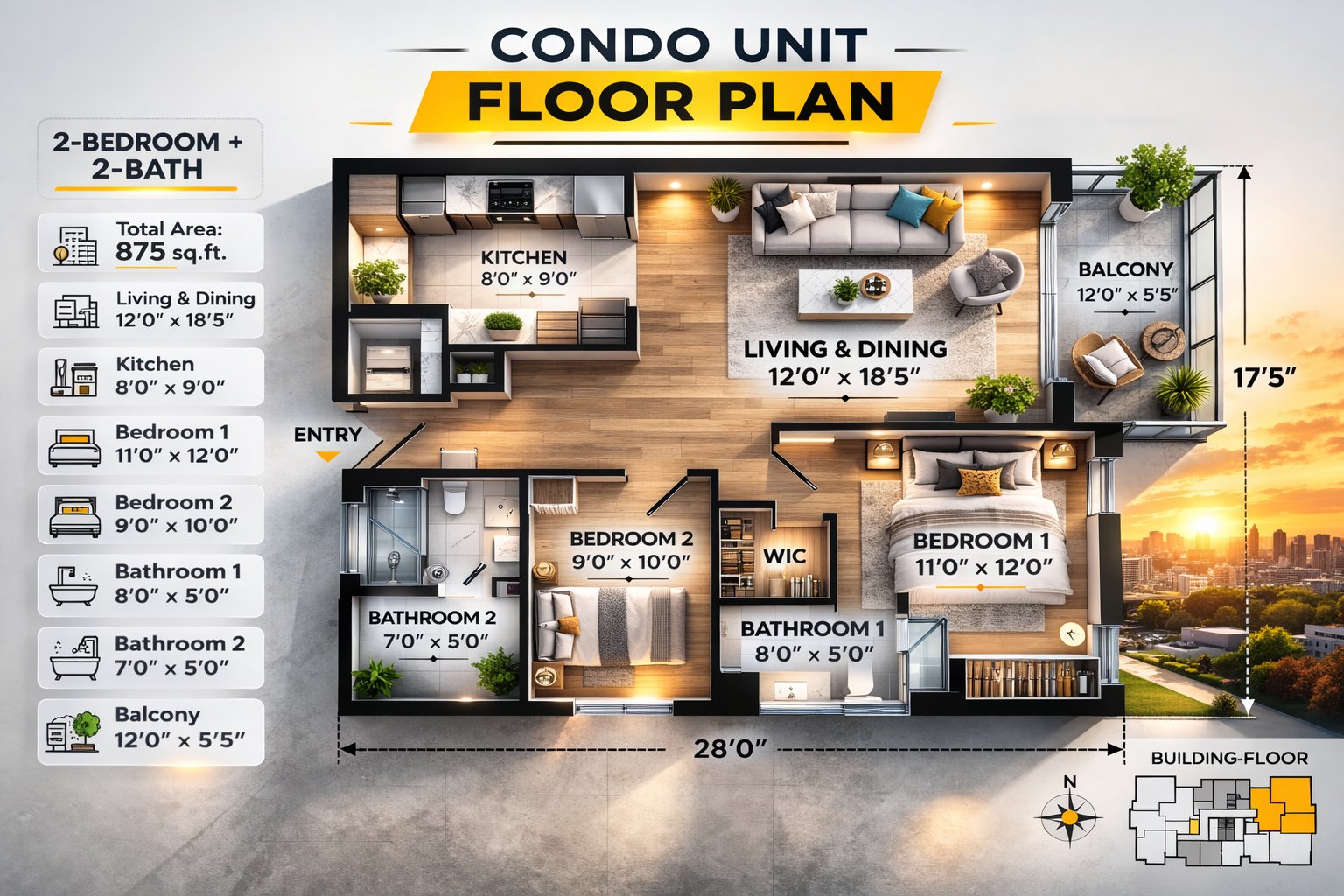
Step 2: Review the Floor Plans and Sign the APS
Once you choose a unit, you’ll sign an Agreement of Purchase and Sale (APS). This is a legally binding contract and should always be reviewed by a real estate lawyer.
The APS outlines:
Purchase price and specifications
Deposit schedule
Developer rights to make changes
Estimated occupancy and closing dates
Default terms and penalty clauses
Ontario provides a 10-day cooling-off period after signing. During this time, you can cancel for any reason and receive your deposit back. Use this window to have a lawyer carefully review all clauses.
Step 3: Understand the Deposit Structure
Unlike resale purchases, preconstruction deposits are paid over time.
A typical GTA deposit structure:
5% on signing
5% at 30–60 days
5% at groundbreaking
5% at a later construction milestone
Total: 20% paid over 2–4 years
Deposits are held in trust and protected under Ontario’s Condominium Act. If the developer cancels the project, deposits must be returned with interest.
However, if the buyer defaults, deposits may be forfeited. That’s why financial planning is critical from day one.
Step 4: Plan for Mortgage Financing
Your mortgage approval happens at final closing — not when you sign the contract.
That means you must qualify based on lending rules, rates, income, and credit conditions that exist 3–5 years from now.
Smart planning includes:
Getting a pre-approval to establish your budget
Working with a mortgage broker familiar with preconstruction timelines
Stress-testing your finances for potential rate changes
Maintaining stable income and credit over the build period
Step 5: Interim Occupancy Explained
When your unit is physically ready but the building isn’t officially registered as a condominium corporation, you enter interim occupancy.
You can move in — but you don’t legally own the unit yet.
Instead of a mortgage payment, you pay a monthly occupancy fee that typically includes:
Interest on the unpaid purchase balance
Estimated property taxes
Estimated maintenance fees
Interim occupancy can last several months or longer. Budget accordingly.
Step 6: Final Closing Costs
When the building registers, title transfers to you and your mortgage begins. Closing on a new condo includes several additional costs many buyers underestimate.
Land Transfer Tax (LTT)
Ontario charges provincial LTT, and the City of Toronto charges a municipal LTT.
On a $700,000 condo, combined LTT can exceed $20,000. First-time buyers may qualify for rebates up to $8,475.
HST on New Homes
New construction is subject to 13% HST.
Primary residence buyers may qualify for the New Housing HST Rebate.
Investors can also claim a rebate if they rent the property and assign the rebate to the developer at closing.
Development Charges and Levies
Municipal development charges and education levies may be passed to the buyer. These can range from a few thousand dollars to $20,000+ depending on the project.
Legal Fees
Expect approximately $1,500–$3,000 for legal services.
Overall, closing costs on a GTA preconstruction condo typically range from 5%–10% of the purchase price, in addition to your deposits.
GTA Preconstruction Market Outlook – 2026
Current data indicates:
New condo sales reached record lows in January 2026 (BILD data)
Approximately 14,700+ unsold units remain available
Benchmark preconstruction prices average around $1,027,486
Condo starts are at their lowest levels since the 1990s
CMHC projects Ontario housing starts will decline further in 2026
What this means for buyers:
Increased inventory
Greater negotiating flexibility
More incentives offered by developers
This environment favors informed buyers who approach projects strategically.
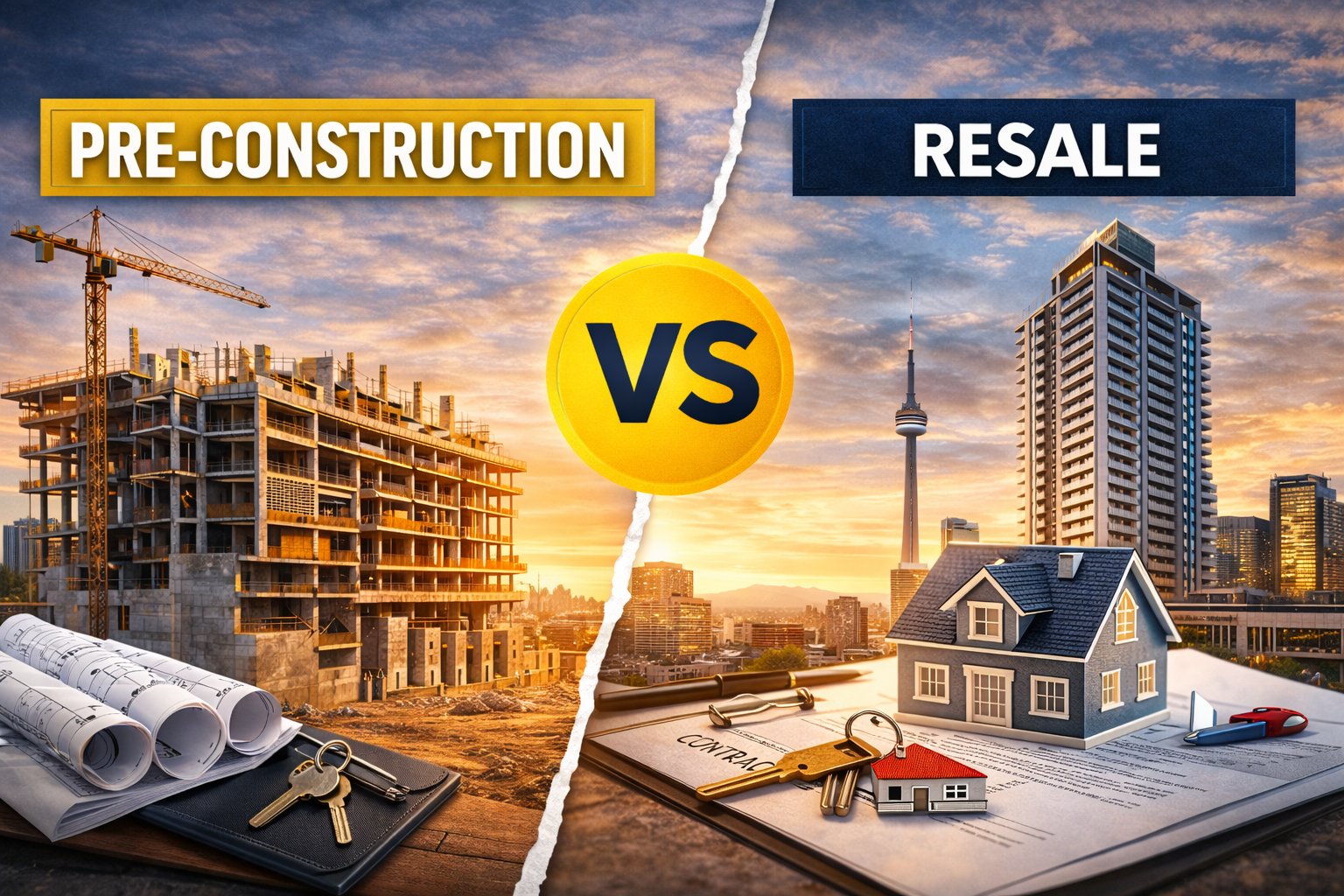
Preconstruction vs. Resale: Which Should You Choose?
Preconstruction may suit you if:
You have a 3–5 year timeline
You prefer spreading deposits over time
You want brand-new construction with warranties
You’re planning for long-term appreciation
Resale may be better if:
You need immediate occupancy
You want to inspect the exact unit before purchasing
You prefer established neighbourhood comparables
You want more certainty in timelines and costs
The right path depends entirely on your goals and financial position.
Key Takeaways
Preconstruction involves purchasing before completion (typically 3–5 years)
Deposits are usually 20%, paid over several stages
Mortgage approval happens at closing, not signing
Interim occupancy involves paying fees before final ownership
Closing costs can add 5–10% beyond the purchase price
2026 market conditions provide buyers with increased leverage
Legal and professional guidance is essential
Final Thoughts
Preconstruction condos can be a powerful long-term strategy — but they require planning, patience, and informed decision-making. Understanding timelines, financing, and closing costs is critical before committing.
If you are considering a preconstruction purchase in Toronto or the GTA, working with an experienced licensed real estate professional and a qualified real estate lawyer can help you navigate the process confidently.
Disclaimer:
This article is provided for general informational purposes only and does not constitute legal, financial, or real estate advice. Market conditions, pricing, and project details may change without notice. Always conduct independent due diligence and consult licensed professionals before making purchasing decisions.
Aman Khattra is a licensed real estate agent with Royal LePage Platinum Realty. This content is intended for educational purposes only.

