

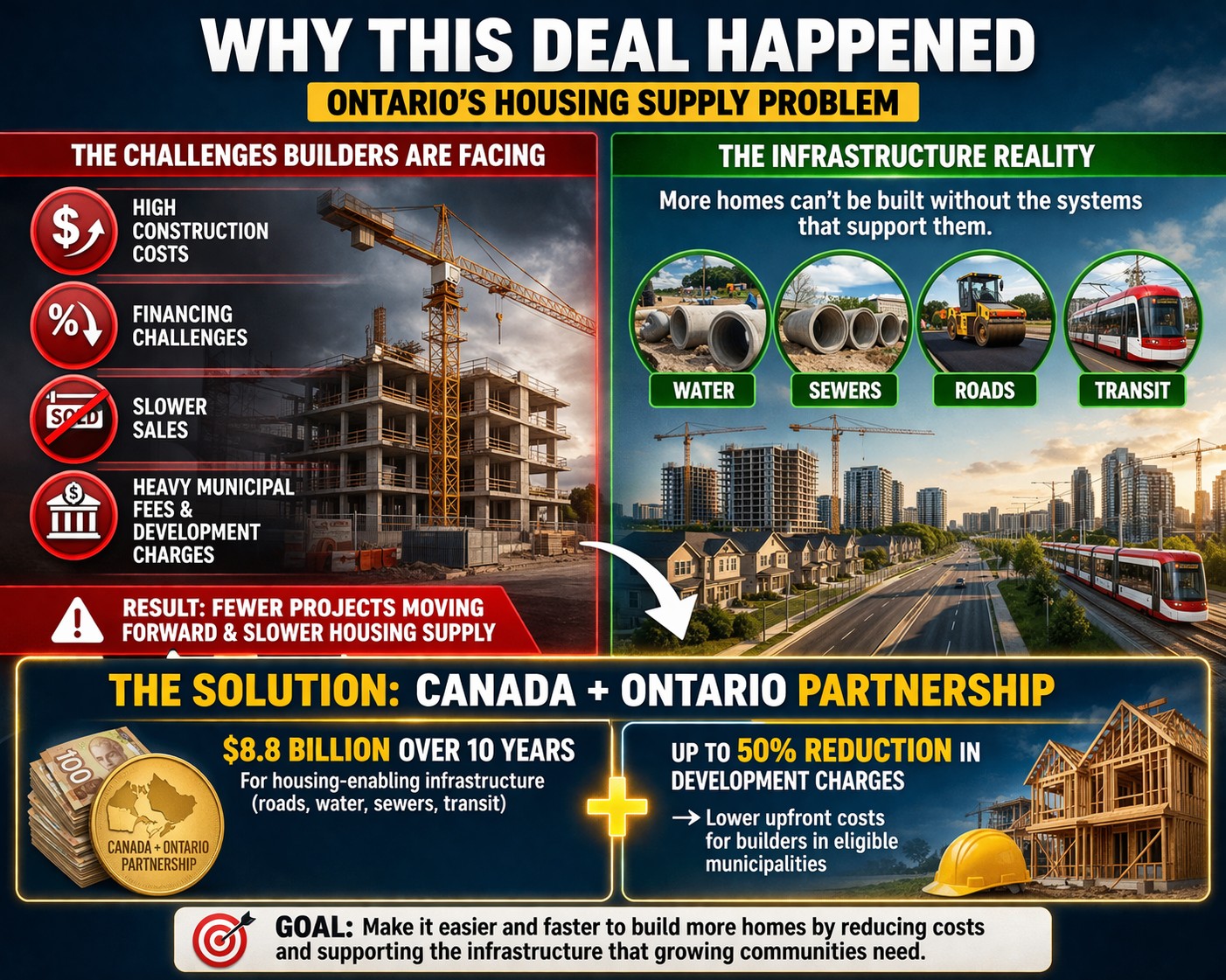
Ontario and the federal government have announced a new housing and infrastructure partnership that could have a big effect on real estate across the province. The agreement includes $8.8 billion over 10 years to support housing-enabling infrastructure and major transit projects, and part of the plan is tied to reducing municipal development charges by up to 50% in eligible municipalities.
So what does that actually mean in simple words?
Development charges are fees builders pay to municipalities when new homes are built. Those fees help fund things like roads, water systems, wastewater systems, and other local infrastructure needed to support growth. When those charges are high, the cost usually gets pushed into the price of new homes, condos, and rental projects. That is one reason new construction has become harder to make affordable. The new partnership is trying to reduce that pressure.
Why did this happen?
This happened because Ontario is still dealing with a major housing supply problem. The province has been trying to find ways to get more homes built faster, but builders have been facing high construction costs, financing challenges, slower sales, and heavy municipal fees. At the same time, governments know that simply asking for more housing is not enough if the infrastructure is not there to support it. Water, sewers, roads, and transit all have to expand along with housing. The new agreement is meant to deal with both problems at the same time: lower some of the upfront costs of building and help fund the infrastructure needed to support more housing.
What could this mean for Ontario real estate?
The biggest possible effect is on new construction.
If development charges come down in a meaningful way, some projects that were too expensive or too risky for builders may start to make more sense again. That could help unlock more condo, rental, and low-rise development in certain markets. It may also improve confidence for builders who have been delaying launches or slowing down projects. This is especially important at a time when Ontario’s own budget lowered its housing-start outlook for the next several years, showing that supply is still not where the province wants it to be.
For buyers, this does not mean prices will suddenly drop overnight. Real estate does not work that fast. But it could help slow future price pressure on some new homes if builders are able to bring more inventory to market with lower costs. In other words, this is more of a supply-supporting move than an instant affordability fix.
For investors and landlords, this could also matter because lower building costs and better infrastructure support may encourage more rental construction over time. Ontario’s 2026 budget separately highlighted support for converting newly built condos into long-term rentals, which shows the province is clearly focused on expanding rental supply as well.
For municipalities, this creates a balancing act. Development charges are a source of funding for local growth-related infrastructure. If charges are reduced, governments need another way to help municipalities handle the cost of growth. That is why this partnership is tied to long-term infrastructure funding and not just a simple fee cut on its own.
The real takeaway
This is important news because it shows governments are finally acknowledging something the industry has been saying for a long time: if Ontario wants more homes, it has to make them easier to build and easier to service. Lowering development charges alone will not solve the housing crisis, but it can remove one major barrier. If this policy is implemented well, it could help builders move projects forward, improve housing supply, and support a healthier real estate market over time.
For anyone watching the Ontario market, this is a story worth paying attention to, especially if you are interested in pre-construction, investment properties, or areas where future growth depends on better infrastructure.
Want to know how this could affect new homes, pre-construction projects, or investment opportunities in your area? Reach out and I can help you understand where this policy may create the biggest opportunities in Ontario real estate.
Disclaimer
This article is for general informational purposes only and does not constitute legal, financial, or real estate advice. Market conditions, government policies, and program details may change. Readers should do their own due diligence and consult licensed professionals before making any real estate, legal, or financial decisions.
Aman Khattra is a licensed real estate agent with Royal LePage Platinum Realty, and this content is intended for educational purposes only.

